Written by Nielsen

What is Spot UV?

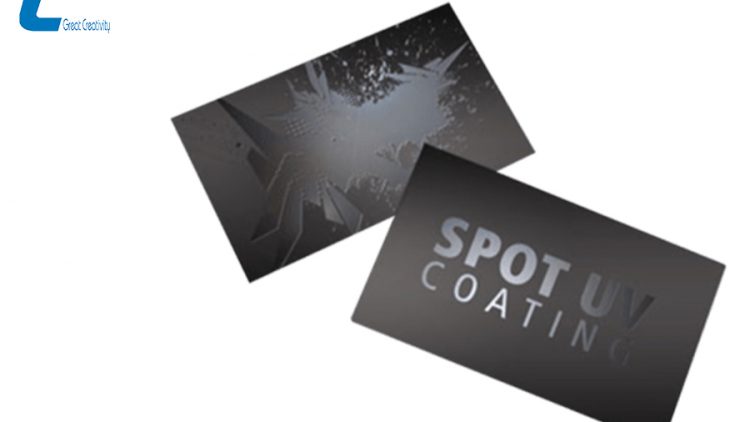
Spot UV is a special processing technology commonly used in the printing and design fields that gives printed matter unique visual and tactile effects. The full name of Spot UV is “Spot Ultraviolet Coating”. It uses ultraviolet light curing technology to add a transparent, high-gloss coating to the surface of the printed matter, thereby producing a different visual effect from the surrounding area.

Features of Spot UV

High-gloss effect: Spot UV can create a high-gloss effect by adding a transparent UV coating to specific areas, making the covered area appear bright and shiny when illuminated by light.

Emphasize details

This technique can be used to emphasize specific details or patterns on a print, making them more prominent within the overall design.

Improve texture

Spot UV is not only a visual improvement, it can also add tactile texture to printed matter. Areas covered by a UV coating will often feel smooth and slightly raised, providing a noticeable tactile contrast to the rest.

Increased durability

UV coating not only provides a unique look but also increases the durability of your prints. It protects print surfaces from scratches, stains and everyday wear and tear.

How to apply Spot UV?

In print design, applying Spot UV requires some professional preparation and technology. The following are general application steps:

Design file

In the design file, it is necessary to clearly identify which areas need to apply the Spot UV effect. This is usually achieved by using a dedicated Spot color channel in the design software.

Printing preparation

In the printing preparation stage, the printing factory will use a special UV coating to print according to the Spot color channel in the design file.

Light Curing

After printing is completed, the area covered by the coating needs to be UV cured. This process allows the UV coating to quickly harden to a shiny surface.

Quality Inspection

Finally, quality inspection is performed to ensure the consistency and quality of Spot UV effects.

Summarize

Spot UV, as a printing special effect, provides designers with rich creative possibilities. With its high gloss, emphasis on detail and added texture, Spot UV not only makes prints more visually striking, but also enhances the tactile experience. When designing prints, consider using Spot UV technology to add a lot of color to your work.
Written by Nielsen

Hotel Key Cards: What to Know

1. Technical specifications and compatibility

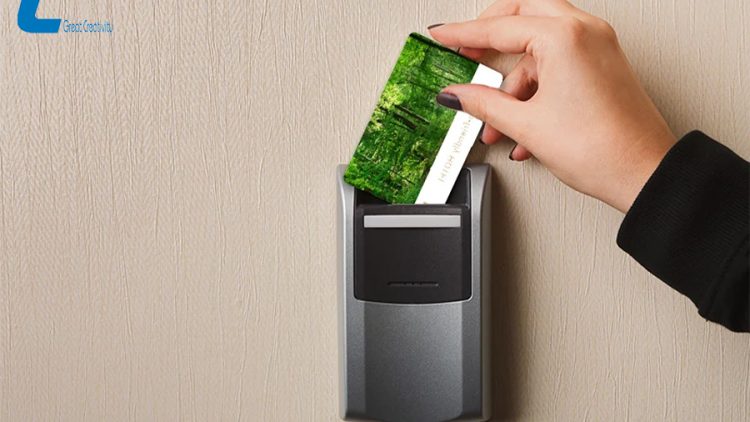
When choosing a hotel key card, the first thing to look at is its technical specifications and compatibility. Different hotel key systems use different technologies, such as magnetic cards, radio frequency identification (RFID) or near field communications (NFC). Make sure the key card technology you choose is compatible with your hotel’s door lock system to prevent unnecessary compatibility issues.

2. Safety performance

Hotel security is of the utmost importance to guests, and key cards are an integral part of that security. Understand the security features of the key card you purchase, including encryption technology and safeguards. Choose keycards with advanced security features to reduce potential security risks.

3. Persistence and Durability

The key card is a must-have for every hotel guest’s stay, so its permanence and durability are crucial. Choose a key card with good manufacturing quality that can withstand regular use and environmental changes to avoid inconvenience to guests due to damage to the key card.

4. Ease of use and user experience

A good hotel key card should have good ease of use, ensuring guests can enter their room easily and quickly. At the same time, consider the user experience and choose key cards that are reasonably designed and easy to operate to avoid problems when guests use them.

5. System support and services

Purchasing a key card is not just a one-time transaction, but also requires subsequent system support and services. Choose a supplier with stable technical support and timely after-sales service to ensure that any problems that arise during use can be solved in a timely manner.

In conclusion

Purchasing a hotel key card is a process that requires careful consideration, involving the security of the hotel and the guest’s stay experience. By understanding technical specifications, security features, durability, ease of use, and system support, hotels can choose a high-quality key card that suits their needs and provide guests with a safer and more convenient check-in experience.

Written by Nielsen

What Are Magnetic Strips ? & How Does It Work ?

Understanding Magnetic Strips and Their Applications

Introduction: Magnetic stripe technology is a means of authentication and information storage that is widely used in our daily lives. These small and thin magnetic strips are integrated into credit cards, ID cards and other various cards, providing us with convenient and secure electronic transactions.

Basic principles of magnetic stripe

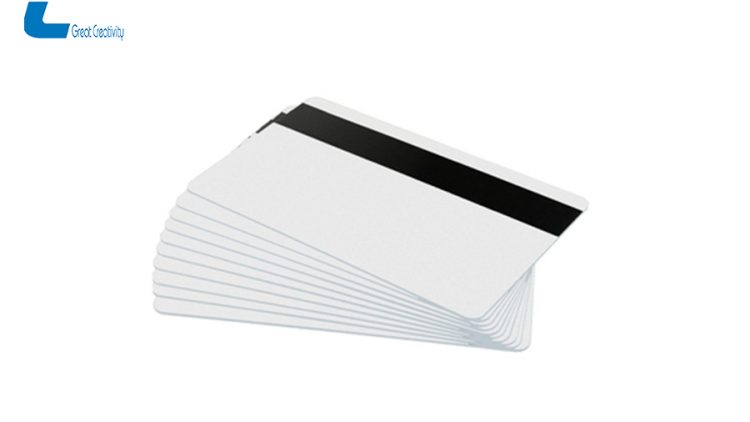
Magnetic stripe is composed of small magnetic particles, which form a specific encoding pattern under the action of a magnetic field. This encoding pattern represents the information stored on the magnetic strip, such as account numbers, names and other personally identifiable information.

The structure of the magnetic strip

The magnetic strip is usually placed on the back of the card in a spiral or longitudinal layout. This layout helps increase the storage density of information and allows readers to quickly and accurately obtain the data stored on the magnetic stripe.

Application of magnetic stripe in credit cards

Credit cards are the most widely used field of magnetic stripe technology. Key account-related information is stored on the magnetic strip, allowing users to easily complete payments when shopping. However, because magnetic stripe information is relatively easy to steal, more and more credit card companies have turned to more secure chip technology in recent years.

Application of magnetic strips in ID cards

Magnetic strips are also commonly found on ID cards and are used to store personal information and other necessary identity verification data. This design makes identity verification more convenient, especially in scenarios where ID cards are frequently required, such as airports and hotel check-ins.

Security Issues and Challenges

Although magnetic stripes have been an important technology over the past few decades, they are not perfect. Magnetic stripe information is relatively easy to steal and copy, which leads to some security challenges. As a result, more and more industries are looking to more secure authentication methods, such as chip card technology.

Future development trends

With the development of technology, new payment and identity verification methods continue to emerge, replacing traditional magnetic stripe technology. It is expected that in the future, magnetic stripes will gradually be replaced by more advanced and safer technologies.

Conclusion

Although magnetic stripe card technology has played an important role in the past few decades, as security needs continue to increase, we are ushering in a new era of authentication and information storage. While the use of magnetic strips may be declining, our needs for security, convenience and innovation will continue to drive technology.

Written by Nielsen

What Is a Foil Card ?

Gold Plated Cards: Unique Glossy Card Art

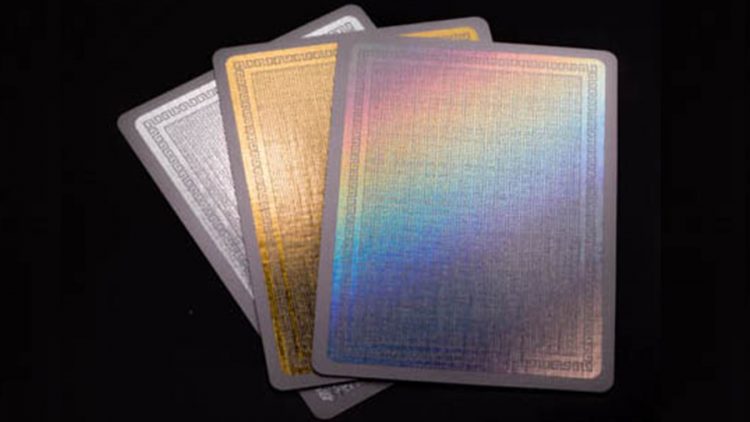
Gold-plated cards, also known as “gold-plated” or “foil cards,” are a special type of card beloved in card games and trading card games (TCG). These cards stand out for their unique appearance and high gloss, making them treasured items for card collectors and players alike.

1. Production process

Gold-plated cards get their name because their surfaces are coated with a thin metallic film, giving the cards their unique luster. This gold plating process is usually achieved by applying a layer of metal film to the card surface after printing and using high temperature or high pressure technology to adhere it to the surface of the card.

2. Unique appearance

The biggest feature of gold-plated cards is their unique appearance. When light hits the surface of these cards, the metallic film reflects the light, creating a beautiful iridescent sheen. This effect makes gold-plated cards stand out in trading card games and become the highlight of the deck.

3. Rarity and collectible value

In many card games, gold-plated cards are often designed to be rare or ultra-rare cards, so they have a higher collectible value. Players often desire these special edition cards to showcase their achievements in the game or to enrich the appearance of their decks.

4. Application in card games

In addition to their visual appeal, gold-plated cards may also have special gameplay effects or abilities in card games. Some gold-plated cards may have more powerful abilities than regular cards, making them part of the strategy in the game.

5. Collection culture

With the rise of card games, collecting gold-plated cards has become a unique cultural phenomenon. Players may participate in exchanging, buying, and selling gold-plated cards, forming a lively collecting community.

6. Summary

Gold-plated cards attract countless card game enthusiasts and collectors with their unique appearance and special status in the game. These cards are not only game props, but also works of art, adding a unique charm to the field of card games and collections through their unique luster.

Whether it’s to showcase your strength in a competition or showcase your collection in the card community, gold-plated cards are a shining pearl in the card world.

Written by Nielsen

What Size Are Bookmarks

Bookmarks are indispensable gadgets in reading. They not only help us mark page numbers, but also add some personality and beauty. However, is there some kind of standard when it comes to bookmark sizes? This article will explore the dimensions of standard bookmarks and their role in the reading experience.

1. Standard Bookmark Size

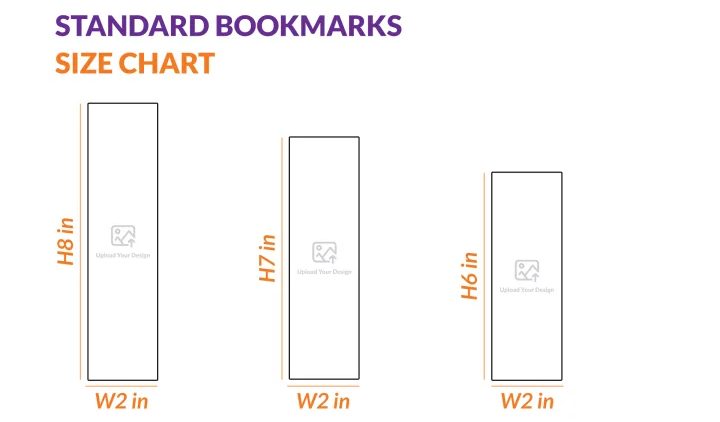
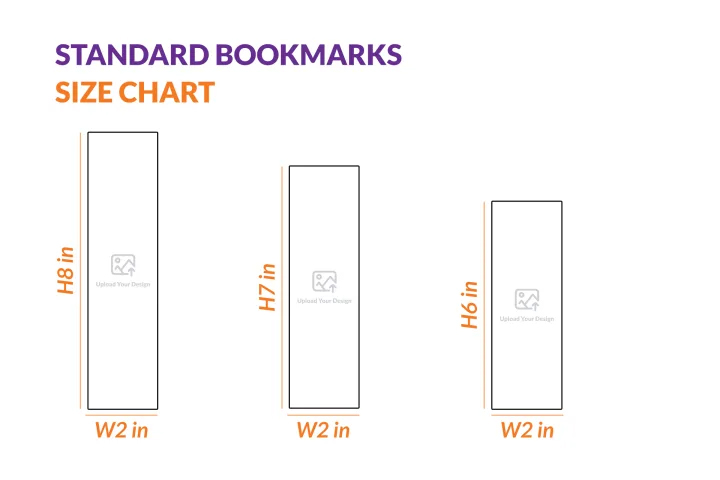
In general, standard bookmarks usually measure 2 inches (width) by 6 inches (height). This size option is both large enough to accommodate some small artwork or designs, yet small enough to be easily inserted into the pages of a variety of books.

2. Influence of Materials

Although standard bookmarks are relatively consistent in size, in reality, bookmarks can be made from a variety of different materials, such as paper, plastic, leather, and more. These different materials may also affect the bookmark’s size and weight to some extent.

3. Custom-sized Bookmarks

In addition to standard sizes, people can also choose custom-sized bookmarks to suit different needs. Some people may prefer a smaller bookmark for easy portability, while others may prefer a larger bookmark to showcase more design and artistic elements.

4. Digital Bookmarks

With the advancement of technology, digital bookmarks have also become a trend. These bookmarks may be markers within the application rather than traditional physical items. Digital bookmark dimensions may vary by application and device.

5. Bookmark Versatility

Although the primary function of bookmarks is to mark pages, they have evolved into a versatile little fixture. In addition to marking page numbers, bookmarks can also serve as gifts, promotional tools, or cultural souvenirs.

Overall, while the standard bookmark size is 2 inches by 6 inches, this is not a hard and fast rule. People can choose bookmarks of different materials and sizes according to personal preferences and needs to personalize and enrich their reading experience.

Whether you prefer traditional paper bookmarks or prefer a digital version, bookmarks are a small but important tool that make reading more fun and convenient.

CXJ Card Factory
Written by Nielsen

Customized and secure, CXJ Card Factory leads ID card innovation

In modern society, security and identity are vital to any business. CXJ Card Factory is at the forefront of the industry, helping companies improve their security and image by providing personalized and highly secure ID cards. Here are a few key points on how CXJ Card Factory customizes and produces more advanced and more secure ID cards:

Personalized design to highlight professional image:

CXJ Card Factory understands the importance of corporate image to success. We offer personalized design options, including corporate logos, color schemes and fonts, ensuring each ID card reflects a unique corporate identity. This not only enhances the visual appeal, but also demonstrates the professional image of the company.

Advanced security features, comprehensive protection:

In order to meet the enterprise’s pursuit of security, CXJ Card Factory integrates advanced security features into the production of ID cards. These features include holographic overlays, UV printing and QR codes, which provide an additional security barrier for ID cards to prevent unauthorized access and identity fraud.

Flexible choice of materials and technologies:

Different companies have different needs, and CXJ Card Factory provides a wealth of material and technology options. Whether it is near field communication cards, smart cards, or traditional PVC cards, our customization services can meet different technical needs to better adapt to the enterprise’s security protocols and access control systems.

Economical solutions for businesses of all sizes:

We believe every business should have access to high-quality, personalized ID cards. Therefore, CXJ Card Factory provides an affordable solution that can be scaled according to the needs of businesses of different sizes. Our commitment is to provide businesses with personalized identification solutions without sacrificing quality and security.

Compliance with industry standards:

CXJ Card Factory always prioritizes compliance with industry standards and regulations. Our carefully crafted ID cards meet security and regulatory standards, ensuring that your enterprise’s identification solutions comply with best practices and regulatory requirements.

With CXJ Card Factory’s personalized and secure ID cards, businesses can ensure that their identification systems both meet the highest standards and are consistent with their corporate identity. We are committed to providing high-quality services and tailor-made solutions for businesses to stand out in a highly competitive business environment.

Written by Nielsen

Exploring the Composition of Credit Cards: Materials and Construction

Credit cards have become an integral part of modern financial transactions, offering convenience and security to consumers worldwide. Have you ever wondered what goes into making these seemingly simple yet sophisticated pieces of plastic? In this article, we will delve into the composition of credit cards, exploring the materials used and the construction process that transforms them into the versatile payment tools we use every day.


The Anatomy of a Credit Card

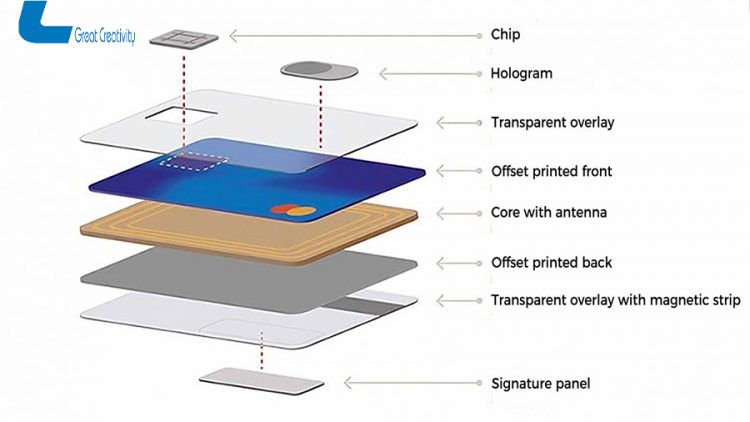
Credit cards might appear to be straightforward, but they are carefully engineered to balance durability, security, and functionality. A standard credit card consists of several layers, each serving a specific purpose.

  1. Core Layer: The core layer forms the base of the credit card. It is typically made of PVC (polyvinyl chloride), a strong and durable plastic. PVC provides the card’s rigidity and thickness. This layer is often referred to as the “card body.”
  2. Printed Design Layer: Above the core layer lies the printed design. This layer includes the cardholder’s name, account number, expiration date, and the issuing bank’s logo. It’s printed using a combination of technologies, including offset printing and digital printing.
  3. Overlay Layer: To protect the printed design and enhance the card’s durability, an overlay layer is applied. This layer is usually made of clear PVC or another protective material. It helps prevent wear and tear, including fading of the printed information.
  4. Magnetic Stripe or Chip Layer: Most credit cards feature either a magnetic stripe or an embedded microchip. The magnetic stripe contains the card’s account information in a format that can be read by magnetic card readers. The chip, also known as an EMV chip, provides enhanced security by generating unique transaction codes for each use.
  5. Signature Panel: A signature panel is often found on the back of credit cards. It’s a white strip that allows cardholders to sign their names, providing an extra layer of authentication during transactions.

Materials Used in Credit Card Production

  1. Polyvinyl Chloride (PVC): PVC is the primary material used for the core layer of credit cards. It’s favored for its strength, durability, and cost-effectiveness. However, concerns about environmental impact have led some manufacturers to explore more sustainable alternatives.
  2. PETG (Polyethylene Terephthalate Glycol): Some credit card manufacturers have started using PETG as an eco-friendly alternative to traditional PVC. PETG is a type of polyester plastic that offers similar strength and durability while being more environmentally friendly.
  3. Holographic Foils and Films: Holographic elements, such as foils and films, are often added to credit cards to enhance security and aesthetics. They create a distinctive visual effect that is difficult to replicate, deterring counterfeiting attempts.
  4. Metallic Inks and Special Pigments: Metallic inks and pigments are used to print certain design elements on credit cards. These inks can create a reflective, shiny appearance that adds a premium feel to the card.

Conclusion

Credit cards are more than just pieces of plastic; they are carefully crafted financial tools that combine various materials to ensure durability, security, and functionality. The intricate layers of PVC, PETG, magnetic stripes, chips, and holographic elements work together to create a payment method that has revolutionized the way we conduct transactions. As technology continues to evolve and environmental considerations gain prominence, the materials and methods used in credit card production are likely to undergo further innovations, making these small plastic cards even more resilient and sustainable in the future.

Written by Nielsen

Making Gift Cards for Your Business: A Step-by-Step Guide

Gift cards have become a popular choice for both customers and business owners alike. They offer a versatile and convenient way to attract new customers, boost sales, and enhance brand loyalty. Creating custom gift cards for your business not only adds a personal touch but also presents an opportunity to showcase your brand’s uniqueness. In this article, we’ll walk you through the step-by-step process of making gift cards that effectively represent your business.


  1. Define Your Brand Identity: Before diving into the design process, it’s crucial to have a clear understanding of your brand’s identity. Consider your logo, color palette, fonts, and overall aesthetic. These elements will serve as the foundation for your gift card’s design, ensuring consistency across all your marketing materials.
  2. Choose a Design Approach: Your gift card design should reflect the essence of your brand and resonate with your target audience. Decide whether you want a minimalist, elegant, playful, or vibrant design. This choice will influence the design elements you incorporate.
  3. Select Card Dimensions and Material: Choose the size and material of your gift cards. Standard credit card dimensions are common, but you can opt for unique shapes or materials that align with your brand. Consider using eco-friendly materials to demonstrate your commitment to sustainability.
  4. You can create gift card designs using graphic design software such as Adobe Photoshop, Illustrator, Canva, or online platforms that offer customizable templates. If design is not your strong point, then you can send us your design sketch, CXJ Card Factory can help you with simple design, and then help you complete your card from the perspective of production and R&D.
  5. Incorporate Branding Elements: Integrate your brand’s logo, color scheme, and fonts into the gift card design. Ensure that the layout is visually appealing and easy to read. Include essential information such as the business name, card value, terms and conditions, and a unique card number.
  6. Design Front and Back: Remember that the back of the gift card is also an opportunity to reinforce your branding. You can include contact information, social media handles, and a brief description of your business’s offerings.
  7. Review and Proofread: Before finalizing the design, carefully review all elements, including text, images, and layout. Proofread the content to ensure there are no typos or errors.
  8. Print Options: Choose a reputable printing service that offers high-quality printing on the selected material. Consider factors such as card durability and print resolution. You can print in batches to save costs.
  9. Implement Security Measures: To prevent fraud, include security features like unique barcodes, holographic foils, or scratch-off panels. These measures protect both your business and your customers.

By following this step-by-step guide, CXJ Card Factory can work with you to create gift cards that not only boost sales, but also serve as an effective marketing tool that increases your business’ visibility and reputation. Remember, a well-designed gift card is more than a monetary tool; it is a monetary tool. It represents your brand values and commitment to exceptional customer experience.

Written by Nielsen

What is Key Card ?

Key card is a common smart card in modern life, its wide application makes our life more convenient and safe. Whether it is used for hotel room access control, office building access control, or as a membership card, student ID card, key cards play an important role in various fields. This article will introduce the definition of the key card, its application and its importance in modern society.

1. What is a key card?

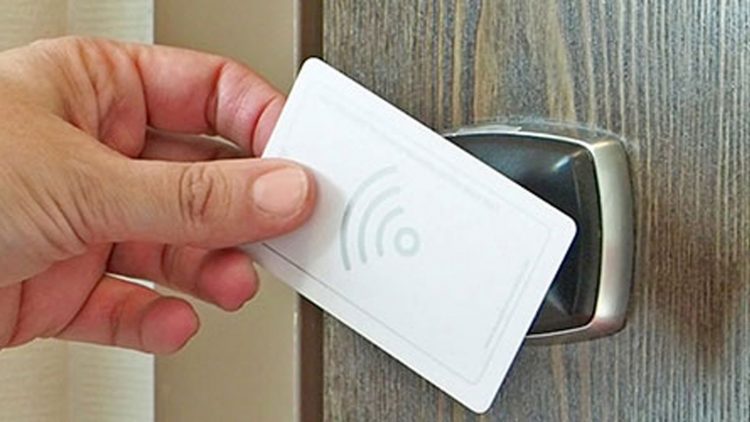
A key card, also known as an access control card, smart card, is a card loaded with a chip or a magnetic stripe, which is used to control and manage access control or identity verification to a specific area. It can replace the traditional metal key, allowing users to authenticate by swiping, sensing or inserting a card to enter areas requiring permissions or obtain specific services.

2. Application field of key card

Hotel access control: Hotels usually use key cards as the room access control system. After checking in, guests will get a key card and can enter their rooms by swiping the card. This is convenient and fast, and it also increases security.

Office building access control: Office buildings and corporate buildings use key cards for access control management. Only employees or visitors with valid key cards can enter specific areas, ensuring the security of company internal information and resources.

School and student ID card: Schools usually provide students with key cards as student ID cards, which are used for entering and leaving the school, borrowing books from the library, eating and drinking, etc., to facilitate management and provide various student services.

Public transportation: The public transportation systems in some cities use key cards as a card swiping tool for passengers. Passengers can use key cards instead of paper tickets, which improves the convenience and efficiency of riding.

Membership card: All kinds of shopping malls, supermarkets, gyms and other membership institutions will issue key cards as membership cards to facilitate identification and recording of member information, and provide exclusive services and benefits for members.

3. The importance of the key card

Convenience: Compared with traditional keys, key cards are more convenient to carry and use. Users only need to carry one card to realize the authorization of multiple access control or services without carrying multiple keys.

Security: The key card adopts digital authentication technology, which can set complex passwords or encryption measures, which improves the security of access control and identity verification, and reduces the risk of illegal entry.

Data management: The key card has a built-in chip or magnetic strip, which can store user information and permissions, which is convenient for system management and data statistics.

Environmental protection and energy saving: Compared with traditional metal keys, key cards are made of plastic and other materials, which reduces resource waste and environmental pollution.

End

As a smart card in modern life, the key card brings convenience and safety to our life through digital authentication technology. It plays an important role in various fields such as hotels, office buildings, schools, and public transportation, and has become an indispensable part of modern society. By using key cards, we can enter specific areas more conveniently, enjoy exclusive services, and effectively improve resource utilization efficiency, making our lives more intelligent and convenient.

id card size
Written by Nielsen

What Is the Size of the ID Card?

Identity card is an important document used to prove personal identity, and it is widely used in countries all over the world. Different countries and regions may have different ID regulations, so IDs may vary in size.

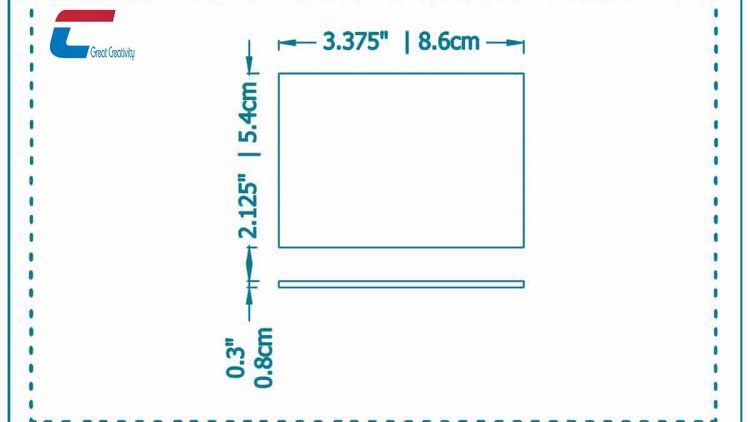
In many countries, the standard ID card size is usually 85.6 mm (3.375 inches) wide and 53.98 mm (2.125 inches) high. This size is known as the “CR80” size, and it’s the same size as a standard credit card. This size ID card fits in a purse or card case for easy portability and use.Contact us for more different card size or custom your ID card

The Origin of Standard Card Sizes

The origin of the standard card size dates back to the mid-20th century, when credit and bank cards became popular. In order to ensure the versatility and portability of these cards, related industries began to formulate a set of unified standard sizes, which was later called the CR80 standard.

The CR80 standard size was first proposed by the International Card Manufacturers Association (ICMA) in 1975. ICMA is an international industry organization specializing in card manufacturing and related technologies, aiming to promote the development and standardization of the card industry.

CR80 standard size is widely used in various types of cards such as credit cards, debit cards, membership cards, ID cards, health insurance cards, etc. Its standard dimensions are 85.6 mm (3.375 in) wide by 53.98 mm (2.125 in) high and typically 0.76 mm (0.03 in) thick. This size card is the same size as a standard credit card and fits conveniently in a purse or card case for easy portability and use.Could click here to custom your standard card .

However, it is important to note that ID card sizes may vary in different countries and regions. Some countries may use slightly different size standards, and some special types of ID cards (such as driver’s licenses, student ID cards, etc.) may have other prescribed sizes.

For example, China’s second-generation ID card measures 85.5 mm (3.366 inches) wide and 54 mm (2.126 inches) high. The German ID card measures 85.6 mm (3.375 inches) wide and 54 mm (2.126 inches) high.

In general, ID card sizes in most countries are close to the CR80 standard size, which helps to ensure the versatility and convenience of ID cards. If you need to apply for an ID card or want to know the ID card size regulations in a specific country or region, it is best to consult the relevant local government department, and they will provide you with accurate and up-to-date information.

1 2 3 4 5 6 12
在线客服